Most people don’t think of a desk, whiteboard or hours of lectures when they think of a career in beauty. Instead, they expect to see a customer in a chair, all the tools laid out, and a familiar routine of shampooing, cutting, coloring or giving treatments.
How you learn the job is so important. While reading about how to perform different treatments and techniques is helpful, it can only take you so far. It won’t start making sense until you’ve physically applied the method, used the products or performed a treatment on an actual person who trusts you to do a good job. With this in mind, let’s take a closer look at the top benefits of hands-on training in beauty school.
Working With Real People vs. Theoretical Work
Theory provides your foundation. You study all aspects of health and safety, hygiene, anatomy, and product knowledge. All of that is very important to help you work safely. What’s missing is how to apply that knowledge to a person you don’t know. Hands-on training in beauty school fills that gap by letting you test your knowledge in real-life situations.
It’s only when you are working with clients’ skin and seeing how it reacts to treatments that you truly start to see the difference in skin types. Often, a fringe will dry shorter than you expected, or a color will develop faster than you’ve anticipated, and you’ll need to decide what you should do next. These decisions are difficult to practice in theory.
Practicing on a student salon floor or in a hands-on setting will help bridge the gap between knowing something in theory and being confident enough to perform it at a job.
Building Confidence Through Everyday Work
Many students initially use mannequin heads. It’s a safe way to build familiarity with various tools, develop proper posture and practice using some of the same techniques used when working with actual clients. You can progress at your own pace, try the same method multiple times and even experience a few issues without worrying about upsetting a client.
The next step in training is generally to transition into working with actual clients. For example, students at the Des Moines and Sioux City campuses of the Iowa School of Beauty will start working with local clients once they’ve completed their foundational techniques.
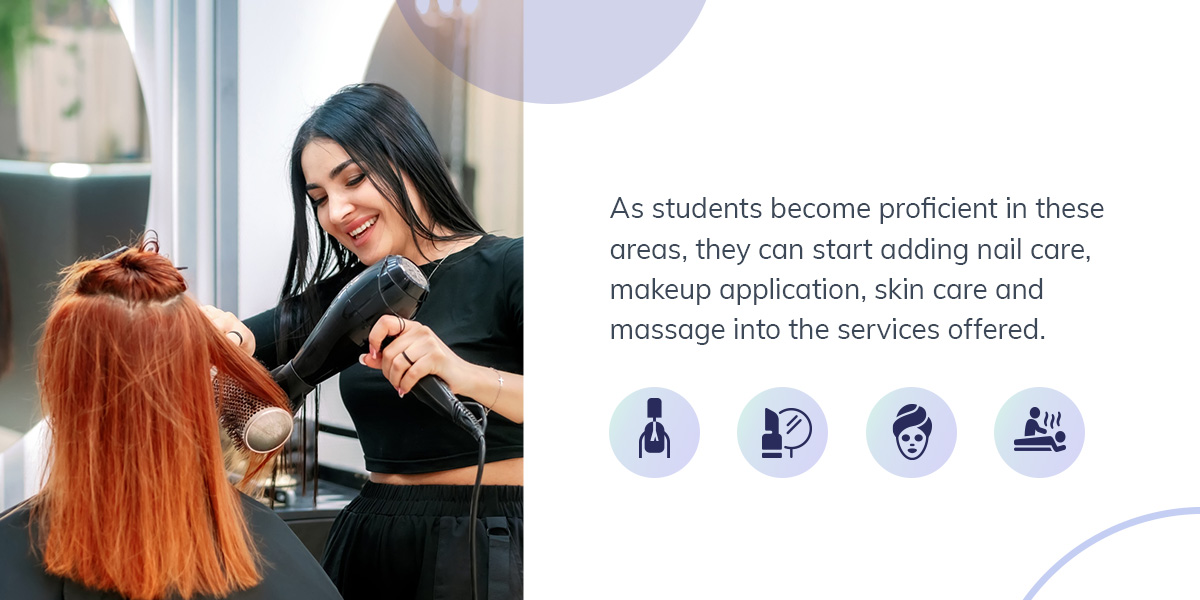
Initially, this will involve simpler services such as hair. As students become proficient in these areas, they can start adding nail care, makeup application, skin care and massage into the services offered. This stage is where you really begin to feel the practical training benefits in cosmetology, because you’re using the same skills in real situations.
Your instructors are always nearby, and they will support you as you complete each service for your clients. You will get to greet the client, take their consultation, provide the service and close the appointment. At the end of the day, you should be able to identify what you’ve accomplished, where you feel comfortable and where you continue to need more practice. Over time, this routine makes the work feel more familiar.
Training to Communicate Effectively With Clients
It’s not just technical ability that makes a good stylist — you talk to clients all day. On a training salon floor, you become comfortable saying hello, asking the client what they hope to achieve from the visit and double-checking to see if there are any other expectations.
Some clients will bring pictures and describe very specifically what they want — others may tell you they want “it trimmed” or “something new,” and you can continue to ask questions to find out what that means to them. You’ll also practice describing what you can accomplish in one visit and how to maintain the style or treatment at home.
All these things are normal communication skills you’ll need to use every day in your work. Because hands-on training provides you with plenty of opportunities to interact with actual clients, the opportunity to develop these skills happens naturally.
Seeing How a Salon Runs Day to Day
Practical experience is made up of far more than just cutting hair. Another big part of the experience of a full-time salon training school is simply being in the building and learning how things get done.
During the training program, students can see how appointments are scheduled and rescheduled, how staff handle late client arrivals, and how to suggest beauty salon retail products to clients without pressuring them to make a purchase. Students will also have opportunities to gain some basic knowledge of money management, cost tracking and repeat business development.
While these details may seem insignificant initially, they are critical to your decision-making process when considering locations for employment, such as renting a chair, and when organizing your own client booking system. You’ll notice the importance of hands-on learning in beauty when you realize how much of this you pick up by being in the salon every day.
Keeping a Record of Your Work
It’s also beneficial to be able to show a history of the work you’ve carried out during your training. Students will often photograph their best work, for example, a successful color, a good finish to a cut, a great set of nails or a satisfactory skin treatment. This portfolio may build up over time and show evidence of your ability to carry out various tasks.
You can store the photographs on your phone, in an online folder or even in a simple paper-based portfolio. When applying for employment, these photographs will generally be more relevant to a potential employer than simply stating what you’ve learned in the course.
Preparing for Licensing
Hands-on experience in a beauty school setting is also one of the most effective ways to prepare for your state board exams. Many of the services that you will perform during training are similar to the tasks you will be asked to complete during licensure testing, from basic cuts and color to sanitation routines and client consultations.
Working with clients under instructor supervision helps you develop the habits examiners and employers look for in you — clean workstations, clear communication, safe product use and finishing a service in the allocated time.
What a Typical Training Day Feels Like at Iowa School of Beauty
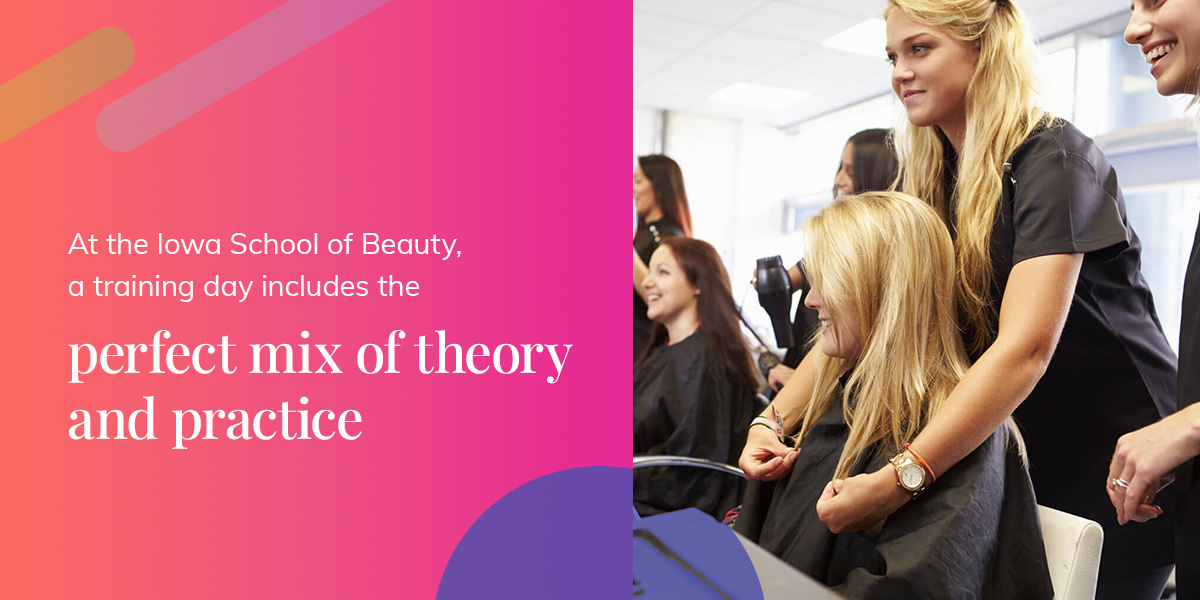
At the Iowa School of Beauty, a training day includes the perfect mix of theory and practice. A morning might start with a short classroom session, going through a new technique, product or requirement. Following that, you’ll have the opportunity to practice your new skills under supervision.
If you’re considering enrolling, we encourage you to visit the school. Seeing the classrooms and speaking with staff and students gives you a clearer picture of what training looks like day to day. If this might be the right step for you, please contact our team to arrange a visit to one of our campuses.


